Store Liquidation vs Bulk Sales

March 23, 2026
A practical guide for retail owners deciding how to exit inventory without leaving money on the table
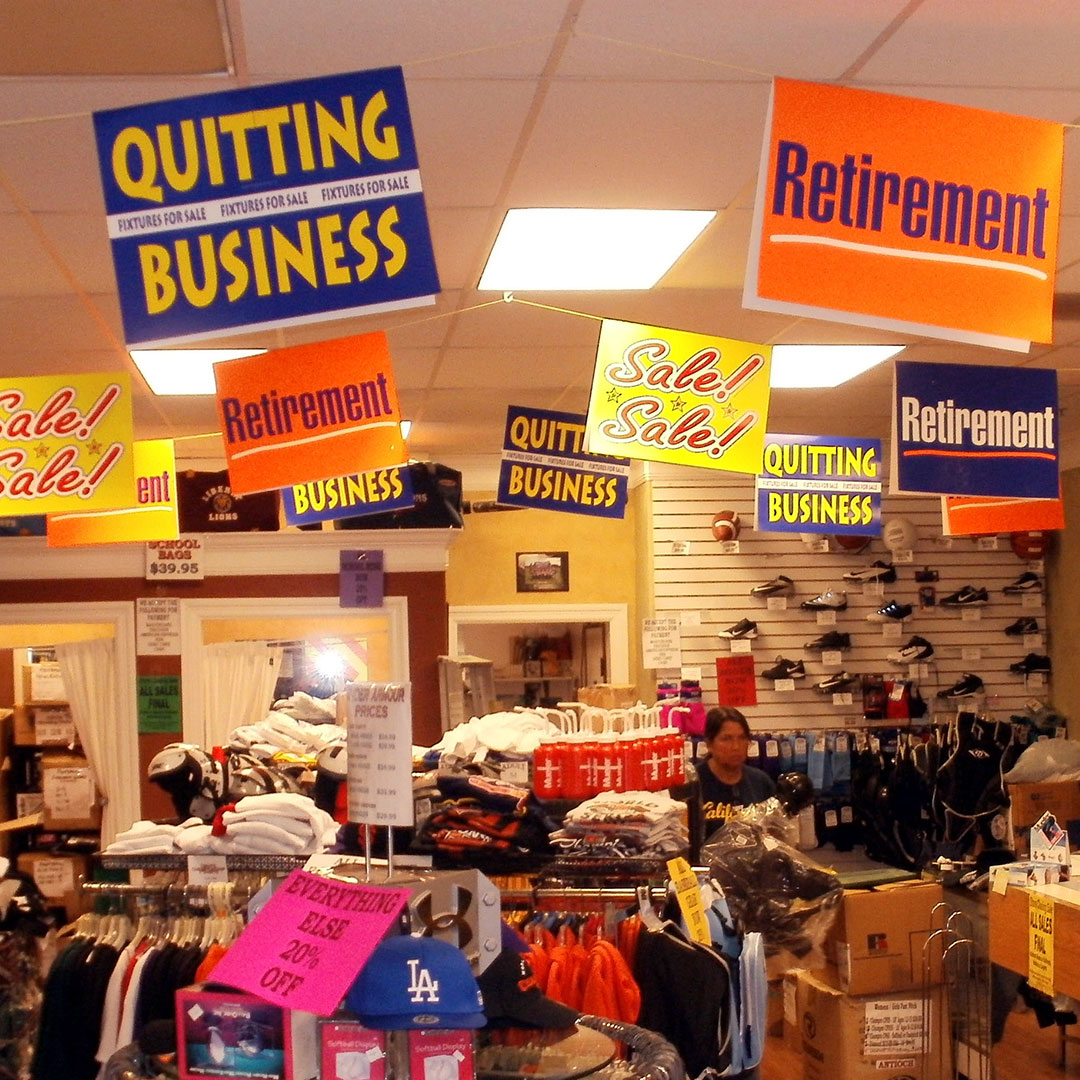
When a retail store needs to convert inventory into cash because of retirement, lease loss, rebranding, financial pressure, or strategic exit, the two most common options considered are bulk inventory sales and store liquidation sales.
They are not equivalent.
The difference between these two paths often determines whether an owner exits with dignity and capital or with regret over assets unnecessarily sacrificed. This guide explains how each option works, where value is created or destroyed, and why professional store liquidation consistently outperforms bulk sales for independent retailers.
What Is a Bulk Inventory Sale?
A bulk sale involves selling inventory all at once, typically to a jobber, wholesaler, closeout buyer, or auction intermediary at a single negotiated price.
How bulk sales typically work
- Inventory is valued at wholesale or below
- Buyer assumes resale risk
- Transaction is fast, but pricing is heavily discounted
- Little to no marketing, merchandising, or customer engagement
- Fixtures and equipment are often excluded or deeply discounted
Typical recovery range
- 5%–30% of retail value
- Often well below inventory cost, especially for specialty or seasonal goods
Bulk sales are primarily designed for lenders, bankruptcy courts, and institutions whose priority is speed, not recovery.
What Is a Store Liquidation Sale?
A store liquidation sale is a structured retail event designed to sell inventory to end consumers, at retail-based pricing, over a defined period of time using professional sale management.
How liquidation sales work
- Inventory is sold through the store, not behind it
- Pricing is controlled and staged over time
- Marketing, signage, and traffic-building are intentional
- Customers return repeatedly, not once
- Fixtures and equipment are actively marketed and sold
- Cash flow is generated early, when margins are strongest
A properly executed liquidation sale is not a clearance event. It is retailing at warp speed, requiring specialized experience to manage pricing psychology, traffic momentum, and tail-end inventory.
Store Liquidation vs. Bulk Sale: A Direct Comparison
| Factor | Bulk Inventory Sale | Professional Store Liquidation |
|---|---|---|
| Buyer | Jobber / reseller | End consumer |
| Pricing basis | Wholesale or below | Retail-based |
| Speed | Fast | Planned, controlled |
| Cash control | Often delayed or escrowed | Owner retains control |
| Marketing | None or minimal | High-impact, strategic |
| Recovery potential | Low | Significantly higher |
| Fixtures & equipment | Often ignored | Actively sold |
| Reputation impact | Invisible or negative | Preserved, dignified |
| Best for | Institutions | Independent owners |
Why Bulk Sales Consistently Underperform
Bulk buyers make money by buying risk, not by paying value. Their margin comes from acquiring inventory cheaply enough to absorb:
- Unknown demand
- Transport and storage
- Their own markdowns
- Time-to-sale risk
That discount is transferred directly to the store owner.
By contrast, retail liquidation captures the consumer’s willingness to pay, which is almost always higher than any wholesale offer—especially when urgency, scarcity, and trust are properly managed.
The Hidden Cost of “Fast and Easy”
Bulk sales are often chosen under emotional or time pressure:
- “I just want this over.”
- “I don’t want to deal with a sale.”
- “I don’t want customers thinking I failed.”
In reality:
- Customers already know the store is closing
- Employees already sense change
- The market has already priced the outcome
The only remaining variable is how much value is recovered.
A rushed exit typically sacrifices the owner’s largest asset, inventory, at the moment it matters most.
Why DIY Liquidation Usually Fails
Some owners attempt to split the difference by running a self-conducted sale. This often produces worse results than either professional option.
Common failure points:
- Deep discounts taken too early
- No ability to sustain traffic past opening weeks
- Inconsistent pricing and messaging
- Poor tail-end inventory management
- Emotional fatigue
- No structured fixture sales
- Loss of control late in the sale
Liquidation experience compounds. Mistakes made early cannot be corrected later.
Why Professional Liquidation Outperforms Both
A professionally managed store liquidation is designed to:
- Generate early high-volume days when margins are best
- Maintain traffic without reckless markdowns
- Sell slow-moving merchandise using strategy, not desperation
- Protect reputation and customer relationships
- Convert fixtures and equipment into additional cash
- Keep the owner in control of receipts and decisions
This is not theory. It is the result of decades of execution across thousands of independent stores.
Where Wingate Sales Solutions Is Different
Wingate Sales Solutions specializes exclusively in independent retail store liquidations, not chain stores, auctions, or bulk disposals.
Key distinctions:
- Family-owned, operating continuously since 1916
- Four generations of liquidation expertise
- On-site consultants with decades of years of experience
- No escrow control of owner funds
- No front-loaded or deceptive fee structures
- No guarantees designed to protect the liquidator instead of the owner
- Customized sale plans based on inventory, season, and market
Wingate liquidation sales routinely recover significantly more than bulk or auction methods, because they are designed to sell inventory at retail, not away from it.
When a Bulk Sale Might Make Sense
Bulk sales may be appropriate when:
- Inventory is already removed from the retail environment
- The store is permanently closed with no reopening
- Time constraints are absolute and non-negotiable
- Recovery is no longer the primary objective
For most independent store owners, these conditions are the exception not the rule.
The Core Question Owners Should Ask
The decision is not:
“How fast can I be done?”
It is:
“How much of my life’s work do I want to recover?”
Once inventory is sold in bulk, the decision is irreversible.

 P.O. Box 48294